Warning: Constant WP_CACHE already defined in /nas/content/live/veritext/wp-config.php on line 175
SPOTLIGHT ON: Joseph Mailand | A Veritext Interview

SPOTLIGHT ON: Joseph Mailand

An Interview by Jan Ballman FAPR, RPR, CMRS; Veritext-Minneapolis

This month Jan chats with court reporter Joseph Mailand about graduating top of his class from the Anoka Technical College court reporting program (at 19!), reporting during the pandemic, and working his way up to realtime.
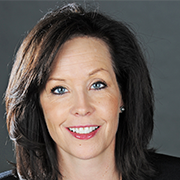
  • Q:  Joseph, THANK YOU for saying yes to being interviewed for The Veritext Voice.  You’re not one to toot your own horn, and I know it’s out of your comfort zone to literally be in the spotlight and talk about yourself, so I appreciate your indulging me.

    A:  There’s a royalty for these interviews, right?  Haha.  You’re welcome.  Thanks for asking.

  • Q:  Yes, be sure to watch for that HUGE royalty check.  It’s “in the mail.”   Joseph, tell everyone which Veritext office you work with.

    A:   I work with the Paradigm/Veritext office in Minneapolis, Minnesota.

  • Q:  A very fine office indeed, if I don’t say so myself!

    A:  I would agree.

  • Q:  So the cat’s out of the bag that we work on the same team! More on that in a second.  Joseph, what led you to this profession?  At what point did you know you wanted to become a court reporter?

    A:  It was pretty random. At the time, I was taking generals in college with a plan to pursue a business degree. My freshman composition professor came up to me before class one day saying she wanted to talk to me about something after class.  Of course, my first thought was, “Uh-oh…”  But as it turned out, she just wanted to recommend that I look into court reporting as a career.  She thought that it might be a good fit for me.  So I looked into it, and it really seemed to be, so I gave it a shot and here I am.  

  • Q:  Where did you train?

    A:  I trained at Anoka Technical College in a suburb of Minneapolis.  It’s the only brick-and-mortar court reporting school in the area and it’s conveniently located like 20 miles from my parents’ house, so that was sweet.

  • Q:  Sweet AND fortuitous, as Anoka Tech has one of the finest reporting programs in the country!

    A:  That didn’t hurt anything.

  • Q:  I’m sure not!  So how long did you study there and when did you graduate?

    A:  It took me one year and 11 months.  (I don’t round up to two years because it sounds more interesting.)  I graduated in December of 2019, the week of my 19th birthday.

  • Q:  Wow.  So there you are–19 years old, recently graduated at the top of your class from an elite reporting school.  You can literally work anywhere in the country you choose, and you choose to freelance in Minneapolis with Veritext.  Tell us about that discernment process.

    A:  Ah, there wasn’t much discernment involved. 

  • Q:  LOL.   Touche.  Go on….

    A:  Right before I graduated, I was lured – I mean, invited to lunch in Downtown Minneapolis by you and Merilee Johnson, where I got a full tour of Paradigm/Veritext’s new offices, met the entire staff, and then was taken to lunch at a nice hotel… where I was metaphorically held at gunpoint until I agreed to freelance with Veritext upon graduating.  So my choice?  Freelance or death, so I chose to freelance with Veritext.  Easy choice.

  • Q:   Very funny, Joseph.  LOL… I knew that would come up! I thought we were more subtle than that, but apparently not.  In all seriousness though, court reporting students are golden.  The profession needs every one of you, and students have lots of choices, so game-on.  And, hey, it worked!

    A:  It worked for me too. 

  • Q:  We’re so happy to have your talent available to our clients, Joseph.  So, thinking back on my first year of reporting (and for me, that means going waaaaay back), I still vividly remember how some of those “firsts” felt.   First assignment.  First time I encountered something I wasn’t prepared or trained to know how to handle.   Can you tell us about any memorable “firsts” thus far in your career and how you navigated them?

    A:  There’s been a lot of them. Fortunately, I have a great mentor in Merilee Johnson, RDR, CRR, CRC, RSA, and in most instances where I’ve encountered something for the first time, I’ve been able to fire off an urgent text to Merilee describing the situation and she’s been able to respond with heroic speed, which has saved me.  But I did have one scenario where texting wasn’t an option. My third or fourth depo ever, an interpreter showed up “unannounced” and I wasn’t prepared with an interpreter oath, so I turned to good ol’ Google. Surprisingly, a result came up that seemed vaguely familiar to what I learned in school, so I just read it off my laptop.

  • Q:  Yeah… we didn’t have Google back in my early days.

    A:  Hard to wrap my head around that.

  • Q:  No Google meant lots and lots of reference books, phone books, maps…

    A:  Maps.  Yeah.  Wow. 

  • Q:  I digress.  So shortly after you graduated, with not all that many months of in-person reporting under your belt, COVID hits and it causes all to pivot to remote.  How did it feel to have to learn a whole new way of doing your job when you were still learning how to do your job?  What were your biggest challenges?   Was there anything good that came out of it?

    A:  Well, this brings back some memories I’d like to forget.  My parents’ home is out in the sticks, so our WiFi was not strong enough to handle Zoom depos.  So for the first couple of months of COVID I had to go to my sister’s house to work because it had a lot better WiFi, so I’d report from there.  At times there was a spare room that I could use, but other times there wasn’t, so I would literally set up my computers on a bed. Fun times. But, hey, none of the attorneys ever noticed, so it worked!

  • Q:  I think we’ve all seen a lot worse on Zoom, Joseph.  You did what you had to do!

    A:  I did.  But the good thing is, it spurred me on to homeownership.  My brother and I purchased a house together last fall, and it has great WiFi, so now I’m living a life of luxury—I have an actual office. 

  • Q:  “First-year court reporter buys house at age 20.”  That’s a pretty solid success story.

    A:  It’s definitely doable.  The money’s there if you work hard.

  • Q:  So now you’ve spent half your career thus far doing in-person depos and the other half doing remote depos.  Which do you prefer?

    A:  I like remote depos….IF the witness has good WiFi and a good mic, which unfortunately is not always the case.

  • Q:  You were actually one of our first reporters to return to in-person reporting.  How have you handled reporting witnesses or attorneys wearing masks?   Did you come up with any tips or tricks to overcome the challenge of not being able to read lips or clearly hear the parties at all times?

    A:  Yeah–running out of the room!  But if that doesn’t work, I have found that, given that I’m usually the youngest person in the room and therefore have “the youngest ears”, if I can’t hear, that usually means the attorneys can’t hear either, so they’ll end up saying something so I don’t have to.

  • Q:  Ah… the benefits of youth.  I vaguely remember.  Joseph, for a new professional, you take a pretty heavy work load and a lot of difficult assignments.  Have you utilized a scopist or proofreader along the way?

    A:  Yes, I’ve used a proofreader from Day One, and I’m really lucky to have her.  She’s a former court reporter and has lots of experience, and it shows.  I couldn’t have done the work I’ve done without her.  Plus, working with her allows me to spend less time on my laptop and more on my writer, which is always a good thing.

  • Q:  Highest and best use of your time, for sure.  Is there any type of reporting or assignment that you’ve come to enjoy more than others?

    A:  Yes–the ones with lots of copy orders.

  • Q:  There’s lots to like about that!  What do you like most about being a freelance reporter?   I mean, besides the copy jobs.

    A:  Like most freelancers, I love the flexibility. If I want to go visit my sister in Arizona next week, I can.  Take a three-day weekend? Why not.    

  • Q:  Work hard/play hard. It’s good to do both…and it’s great to be able to play when you want to play! Joseph, in terms of career goals, do you have any aspirations you’d like to share about where you see yourself in the future?

    A:  I want to eventually be able to offer realtime. It’s still a bit intimidating, but I’m sure that confidence will come in time. Traveling for reporting would be fun as well, whether that’s international or state to state. I’ve always enjoyed traveling for fun, but being able to travel AND get paid for it would be even cooler. I know COVID has thrown a wrench in that for now, but one day.

  • Q:   It will be back, and I know you have the ability to achieve anything you set your mind to.  Last question for you:  What’s been the biggest challenge you’ve faced in your new career?

    A:  Time management. Since every week your schedule is different, it can be really hard to develop a routine. After almost two years, I’ve found that it’s basically impossible to have a fixed schedule as a freelancer. I’ve gotten better, though, and also have learned to enjoy the unpredictability.

  • Q:  That’s a great attitude to have, and it will serve you well in the freelance profession, Joseph.  Well, thanks once again for being a good sport and saying yes to this.  I told you it would be fun and easy.

    A:   Yeah.  About that royalty check…?

  • Q:  Another thing that will take you far in this world is that great sense of humor.  But your talent as a court reporter will surely take you much further.  Thanks again, Joseph.

    A:  You’re welcome, Jan.

About Jan Ballman – FAPR, RPR, CMRS – Principal, Minneapolis

Jan began her career as a court reporter in 1981. In 1990, she was elected President of the state court reporters association. This experience afforded the opportunity to meet many outstanding court reporters and industry leaders. In 1993, Jan collaborated with two highly regarded colleagues–Jayne Seward and Lisa Richardson–to form Ballman, Richardson & Seward. Five years later, Jan led the merger of BR&S with two well-known and highly respected firms–Schultz & Sorenson; and Oliver, Mitchell & Maves—and launched Paradigm Reporting & Captioning on January 1, 1998.

After a 20-year career as a court reporter, Jan retired her steno machine in 2002 in favor of taking the helm of Paradigm on a full-time basis.

A recognized leader at both the state and national level, Jan was bestowed Minnesota’s highest honor, the Distinguished Service Award, by the Minnesota Association of Verbatim Reporters and Captioners in 2004. In 2010, Jan was elected to serve on the Board of Trustees of the National Court Reporters Foundation and was honored to accept the appointment as Chair of the Board from 2014 to 2016. In August of 2017, Jan was inducted into as a Fellow into the Academy of Professional Reporters. Currently, Jan Ballman is the only court reporter in Minnesota to have attained the professional distinction of FAPR.

Outside of her chosen profession, Jan enjoys working with local nonprofits, mentoring tomorrow’s leaders, and exploring the world of wine. Since 2011, Jan has been delighted to chair “Legal Wine Lovers,” an official affinity group of Minnesota Women Lawyers.

© Copyright 2025, Veritext, LLC | Starting June 30, credit card payments may incur a surcharge. No surcharge applies to ACH, check, or debit card payments. For Oklahoma-based consumers, the surcharge is 2%.