Native American Heritage Month

– November –

To recognize Native American Heritage Month and honor the history, pursuits, accomplishments, and legacy of Native American communities, we have pulled together some important resources and encourage you to reflect, learn and continue taking actions that build more inclusivity in our communities and workplace.

  • What Native Land Do You Live On?

    Click through for a searchable map of Native territories, languages and treaties. Type in your address, city, or state to learn more about the indigenous lands you live on.

The Origins of Native American Heritage Month | NowThis

HISTORY

Native American Heritage Website

What started at the turn of the century as an effort to gain a day of recognition for the significant contributions the first Americans made to the establishment and growth of the U.S., has resulted in a whole month being designated for that purpose.

One of the very proponents of an American Indian Day was Dr. Arthur C. Parker, a Seneca Indian, who was the director of the Museum of Arts and Science in Rochester, N.Y. He persuaded the Boy Scouts of America to set aside a day for the “First Americans” and for three years they adopted such a day. In 1915, the annual Congress of the American Indian Association meeting in Lawrence, Kans., formally approved a plan concerning American Indian Day. It directed its president, Rev. Sherman Coolidge, an Arapahoe, to call upon the country to observe such a day. Coolidge issued a proclamation on Sept. 28, 1915, which declared the second Saturday of each May as an American Indian Day and contained the first formal appeal for recognition of Indians as citizens.

The year before this proclamation was issued, Red Fox James, a Blackfoot Indian, rode horseback from state to state seeking approval for a day to honor Indians. On December 14, 1915, he presented the endorsements of 24 state governments at the White House. There is no record, however, of such a national day being proclaimed.

The first American Indian Day in a state was declared on the second Saturday in May 1916 by the governor of New York. Several states celebrate the fourth Friday in September. In Illinois, for example, legislators enacted such a day in 1919. Presently, several states have designated Columbus Day as Native American Day, but it continues to be a day we observe without any recognition as a national legal holiday.

In 1990 President George H. W. Bush approved a joint resolution designating November 1990 “National American Indian Heritage Month.” Similar proclamations, under variants on the name (including “Native American Heritage Month” and “National American Indian and Alaska Native Heritage Month”) have been issued each year since 1994. Source

IN CANADA
National Indigenous History Month in Canada, is celebrated in June and is an opportunity to learn about the unique cultures, traditions and experiences of First Nations, Inuit and Métis. It’s a time to honour the stories, achievements and resilience of Indigenous Peoples, who have lived on this land since time immemorial and whose presence continues to impact the evolving Canada.

The House of Commons designated June as National Aboriginal History Month in 2009. The name was changed to National Indigenous History Month in 2017. Source.

2022 Gathering of Nations Pow Wow | www.powwows.com

Women’s Jingle – 2022 Gathering of Nations PowWow | www.youtube.com/c/NewMexicoPowwows
PROMINENT PEOPLE

LEARN, SHOP & EAT

NATIVE AMERICAN MUSEUMS & EXHIBITS

Below are a few museums throughout North America that celebrate, entertain, and educate guests about Native American culture and history in the United States.
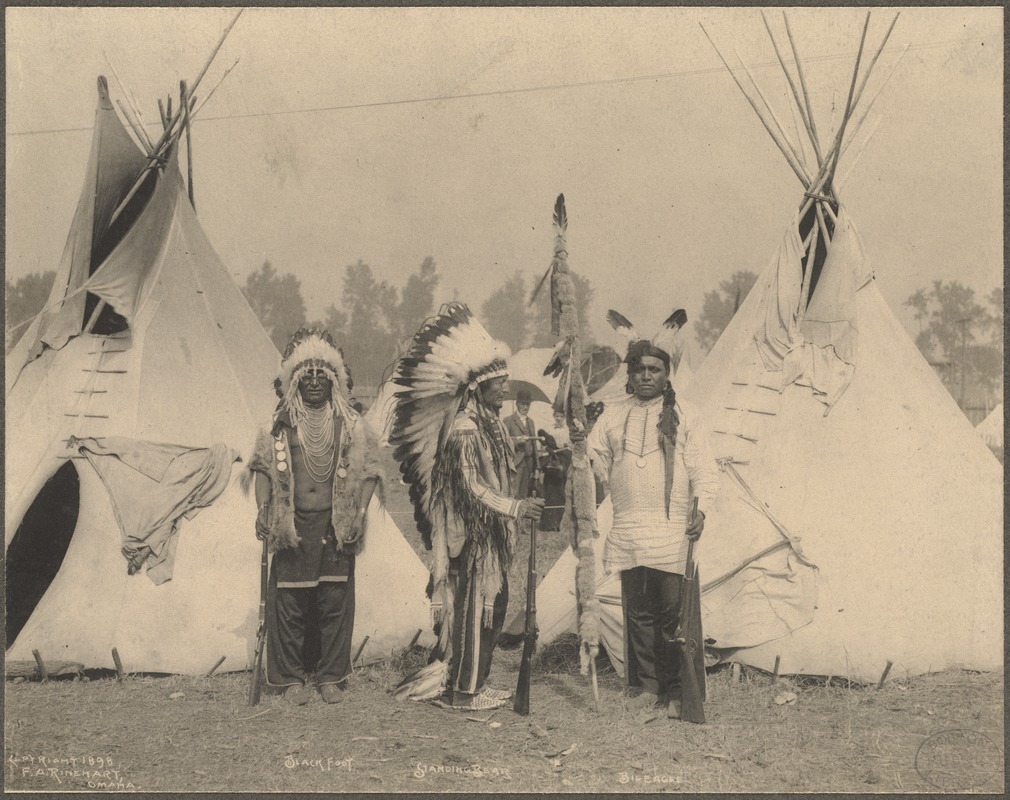
Black Foot, Standing Bear, Big Eagle, Sioux. Three members of the Sioux tribe pose in Indian Village, 1898. Source

  • Heard Museum | Phoenix, AZ

    Since its founding in 1929, the Heard Museum has grown in size and stature to become recognized internationally for the quality of its collections, world-class exhibitions, educational programming and its unmatched festivals. Dedicated to the advancement of American Indian art, the Heard successfully presents the stories of American Indian people from a first-person perspective, as well as exhibitions that showcase the beauty and vitality of traditional and contemporary art.

  • Denver Art Museum | Denver, CO

    The mission of the Denver Art Museum is to enrich the lives of present and future generations through the acquisition, presentation, and preservation of works of art, supported by exemplary scholarship and public programs related to both its permanent collections and to temporary exhibitions presented by the museum.

  • Ah-Tah-Thi-Ki | Clewiston, FL

    Nestled in the heart of the Everglades on the Big Cypress Seminole Indian Reservation, the Ah-Tah-Thi-Ki Museum is home to more than 180,000 unique artifacts and archival items. Come and learn about the Seminole people and experience their rich cultural and historical ties to the Southeast and Florida, as they have made Big Cypress their home since creation.

  • The Eiteljorg Museum | Indianapolis, IN

    Indianapolis businessman and philanthropist Harrison Eiteljorg and other civic leaders founded the Eiteljorg Museum of American Indians and Western Art. From the museum’s opening in 1989, its mission has been to inspire an appreciation and understanding of the art, history, and cultures of the American West and the Indigenous peoples of North America. The museum carries out this focus in exciting and often surprising ways.

  • The Museum of Indian Arts and Culture | Santa Fe, NM

    The Museum of Indian Arts and Culture, one of four museums in the Museum of New Mexico system, is a premier repository of Native art and material culture and tells the stories of the people of the Southwest from pre-history through contemporary art. The museum serves a diverse, multicultural audience through changing exhibitions, public lectures, field trips, artist residencies, and other educational programs.

  • Millicent Rogers Museum | Taos, NM

    The Millicent Rogers Museum was established in 1956 by her son Paul Peralta-Ramos as a memorial to her memory and to showcase the arts and cultures of the southwest that had so fascinated Rogers. Her son Paul Peralta-Ramos dedicated much of his life to building the extraordinary collection of more than 7,000 objects that document the arts and cultures of the southwest.

  • Six Nations Indian Museum | Onchiota, NY

    The Six Nations Indian Museum features artifacts, arts, and educational exhibits from the perspective of North American indigenous peoples. With a focus on Haudenosaunee culture, this unique museum represents the tribes of the Six Iroquois Nations Confederacy: Mohawks, Senecas, Onondagas, Oneidas, Cayugas, and Tuscaroras.

  • Onöhsagwë:de’ Cultural Center | Salamanca, NY

    The Seneca-Iroquois National Museum proudly houses an extensive collection of Hodinöhsö:ni’ historical and traditionally designed decorative and every-day-use items and archaeological artifacts. SINM, along with the Seneca Nation Archives Department, are the safe keepers of historical documents, including articles, special publications, historical and family photographs and various multi-media productions regarding the Onöndowa’ga:’ and Hodinöhsö:ni’.

  • First Americans Museum | Oklahoma City, OK

    In one place, visitors experience the collective histories of 39 distinctive First American Nations in Oklahoma today. First Americans Museum shares the cultural diversity, history, and contributions of the First Americans.

  • National Museum of the American Indian | Washington, DC

    A diverse and multifaceted cultural and educational enterprise, the National Museum of the American Indian (NMAI) is an active and visible component of the Smithsonian Institution, the world’s largest museum complex. The NMAI cares for one of the world’s most expansive collections of Native artifacts, including objects, photographs, archives, and media covering the entire Western Hemisphere, from the Arctic Circle to Tierra del Fuego.

ORGANIZATIONS TO SUPPORT

Learn more about just a few non-profit groups and organizations that work to celebrate and recognize the history, pursuits, accomplishments, and legacy of Native Americans.
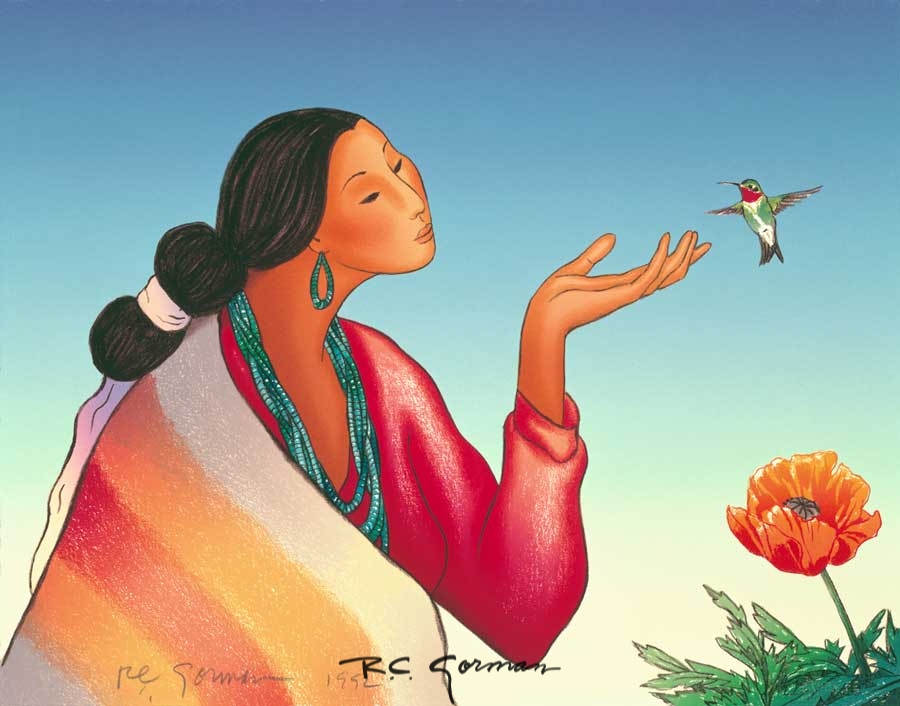
Chinle Ruby Throated Hummingbird by R.C. Gorman. Source
  • Cultural Survival

    Cultural Survival is an Indigenous-led NGO and U.S. registered non-profit that advocates for Indigenous Peoples’ rights and supports Indigenous communities’ self-determination, cultures, and political resilience, since 1972. For 49 years, Cultural Survival has partnered with Indigenous communities to advance Indigenous Peoples’ rights and cultures worldwide.

  • The Wôpanâak Language Reclamation Project

    The Wôpanâak Language Reclamation Project began in 1993 under the direction of jessie ‘little doe’ baird who earned a Master’s Degree in Algonquian Linguistics from MIT in 2000. Through the joint collaborative efforts of members of The Assonet Band of Wampanoag, The Mashpee Wampanoag Tribe, the Wampanoag Tribe of Aquinnah and the Herring Pond Band of Wampanoag, their mission is to return language fluency to the Wampanoag Nation as a principal means of expression.

  • Partnership with Native Americans

    Partnership With Native Americans is a 501 (c)(3) nonprofit organization committed to championing hope for a brighter future for Native Americans living on remote, isolated and impoverished reservations. Collaborating for nearly 30 years with reservation partners, they provide consistent aid and services for Native Americans with the highest need in the U.S.

  • First Nations Development Institute

    First Nations Development Institute improves economic conditions for Native Americans through direct financial grants, technical assistance & training, and advocacy & policy.

  • The Association on American Indian Affairs

    The Association on American Indian Affairs is the oldest non-profit serving Indian Country protecting sovereignty, preserving culture, educating  youth and building capacity. The Association was formed in 1922 to change the destructive path of federal policy from assimilation, termination and allotment, to sovereignty, self-determination and self-sufficiency. Throughout its 100-year history, the Association has provided national advocacy on watershed issues that support sovereignty and culture, while working on the ground at a grassroots level with Tribes to support the implementation of programs that affect lives on the ground.

  • The American Indian Science and Engineering Society (AISES)

    The American Indian Science and Engineering Society (AISES) is a national nonprofit organization focused on substantially increasing the representation of Indigenous peoples of North America and the Pacific Islands in science, technology, engineering, and math (STEM) studies and careers.

  • National Indian Child Welfare Association

    NICWA works to support the safety, health, and spiritual strength of American Indian and Alaska Native children along the broad continuum of their lives. We support tribes in building the capacity to prevent child abuse and neglect through positive systems change at the state, federal, and tribal levels. They are the most comprehensive source of information on American Indian and Alaska Native child welfare.

  • Native American Rights Fund

    The Native American Rights Fund holds governments accountable. They fight to protect Native American rights, resources, and lifeways through litigation, legal advocacy, and legal expertise.